A reverse osmosis system treats the water at one tap, such as the kitchen sink, for drinking and cooking. Here is how it works, what it needs, and what to ask before one goes in.
Water Softener San Jose is an independent referral service, not an installer or plumber. When you send the form, your details are passed to an independent local water treatment pro, who can contact you and prepare a quote. This page explains the system so you can compare quotes on the same terms.
How reverse osmosis works
EPA’s WaterSense program describes reverse osmosis as the process by which pressure forces water through a semi-permeable membrane. Two streams come out: treated water, called permeate, and reject water, called concentrate or brine, which carries what the membrane held back and goes down the drain. A point-of-use system is connected to a single fixture, for example under the kitchen sink.
According to EPA, RO systems can potentially remove water contaminants such as lead, volatile organic compounds (VOCs), PFAS, arsenic, bacteria and viruses. What a given unit is tested to reduce is a different question, answered by its certification: NSF/ANSI 58 is the standard for reverse osmosis drinking water treatment systems. Ask which contaminants a unit is certified to reduce, not only whether it is certified.

What an under-sink system includes
Designs differ by maker, but as general practice an under-sink reverse osmosis system in a San Jose kitchen has these parts.
- A feed connection from the cold water line under the sink.
- One or more pre-filters ahead of the membrane.
- The RO membrane in its housing.
- A storage tank, on models that store treated water (some designs have no tank).
- A post-filter on some designs, before the tap.
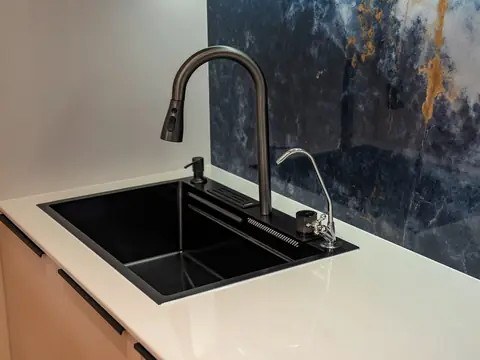
- A separate drinking water faucet on the sink or countertop.
- A drain connection for the reject water.
The drain connection is the part to discuss in detail. Ask where it connects, how the installer plans to make that connection, and whether your job needs a plumbing permit. For San Jose, check with the City of San Jose permit center.
The water that goes down the drain
This is a figure worth asking about. EPA says a typical point-of-use RO system generates five gallons or more of reject water for every gallon of treated water it produces, and some inefficient units generate up to 10. WaterSense labeled systems must send 2.3 gallons or less down the drain per gallon treated.
| System (EPA WaterSense figures) | Reject water per gallon treated |
|---|---|
| Typical point-of-use RO system | 5 gallons or more |
| Some inefficient units | Up to 10 gallons |
| WaterSense labeled systems | 2.3 gallons or less |
It is fair to ask whether a unit carries the WaterSense label and what its rated reject ratio is.
Why San Jose homeowners ask about reverse osmosis
Preference is one reason, and San Jose’s water varies. San Jose Water draws on mountain surface water, groundwater and Valley Water treated surface water, and its 2025 report gives very different hardness for each: about 9, 16.8 and 5.8 grains per gallon on average. Total dissolved solids is another: EPA’s secondary guideline for total dissolved solids is 500 mg/L, a non-enforceable guideline for taste, deposits and staining.
PFAS is a third. San Jose Water’s 2025 report says it monitors 88 groundwater wells and 9 surface sources for PFAS. Federally, EPA’s final rule set enforceable limits of 4.0 parts per trillion for PFOA and for PFOS; on May 18, 2026 EPA proposed keeping those limits while letting water systems request two more years, to 2031, to comply, and proposed rescinding the limits for PFHxS, PFNA, HFPO-DA (GenX) and the hazard index mixture. When this page was written those were proposals, not final rules; EPA’s PFAS page has the current status. For the full picture of your supply, read your water provider’s annual water quality report; our guide to San Jose water quality explains how.
A note on health
This site makes no claim that tap water is unsafe or that treated water is healthier. A reverse osmosis system is a choice about what you want at your tap. Its certification tells you what it has been tested to reduce.

Want treated water at the kitchen tap? Send the form and an independent local pro can prepare a quote.
Reverse osmosis with a water softener
A softener and an RO system do different jobs. The softener works on the calcium and magnesium that cause hard water, through the whole house. The RO system treats drinking water at one tap. Some San Jose homes have both: a softener on the main line for scale and lather, and RO at the kitchen sink for drinking and cooking. If you have, or are adding, a softener, ask how the RO system will be fed and whether your water’s hardness affects the membrane. Our page on water softener installation in San Jose covers the softener side.
Salt-based softeners add sodium to the water in exchange for the hardness they remove. If anyone in your home is on a sodium-restricted diet, ask your doctor about drinking softened water, and ask the pro whether the drinking tap can be fed differently.
Reverse osmosis or a filter at the tap?
Not every drinking water question needs reverse osmosis. Choosing home treatment starts with one question: what contaminant do you want to remove or reduce? Then choose a unit certified by NSF, Underwriters Laboratories or the Water Quality Association to remove that contaminant.
If your concern is chlorine taste and odor, a filter certified to NSF/ANSI 42 is tested for those aesthetic effects. If it is a health-related contaminant such as lead, NSF/ANSI 53 is the filter standard for health effects. Reverse osmosis, under NSF/ANSI 58, is the choice when you want a membrane system and accept the reject water that comes with it. Your water provider’s annual report is the place to see what has been found in your supply before you choose.
Whole-house reverse osmosis
Treating every tap with reverse osmosis is a bigger installation than an under-sink unit. The installer sizes it after a water test. If you are considering it, ask what the system needs around it and how much reject water it would send to the drain, and compare it with a whole house water filter in San Jose plus RO at the kitchen tap.
Looking after an RO system
Pre-filters, the membrane and any post-filter all need changing over time. Follow the maker’s schedule for your model and use the parts it names. Before you buy, ask what replacement filters and membranes the unit takes and where they can be bought, so upkeep does not depend on one seller.
- Keep the manual and note the model of each filter and the membrane.
- Write the date on each new filter when it goes in.
- If the treated water slows, tastes different or the tank does not refill, ask for a service visit.
- If the unit leaks under the sink, close its feed valve and ask for a repair.
Questions to ask before an RO install
- Is the system certified to NSF/ANSI 58, and which contaminants is it certified to reduce?
- Is it WaterSense labeled, and how much reject water does it send to the drain per gallon treated?
- Where will the drain connection go, and does the job need a plumbing permit?
- Which faucet will be fitted, and will it need a new hole in the sink or countertop?
- Which filters and membrane does it take, and what does the maker say about replacing them?
- Is everything in the price written down so I can compare it with another quote?
If your question is broader than one tap, such as taste or odor through the whole house, our page on water filtration in San Jose sorts filters by the standard they are tested to. Send the form and choose the job; asking is free and you never have to buy.
Questions people ask
Is reverse osmosis worth it in San Jose?
It depends on what you want at the tap. RO treats drinking water at one fixture; EPA says RO can potentially remove contaminants such as lead, VOCs, PFAS and arsenic. A unit’s NSF/ANSI 58 certification shows what it was tested to reduce.
How much water does a reverse osmosis system waste?
EPA says a typical point-of-use system sends five gallons or more of reject water to the drain per gallon treated, some up to 10. WaterSense labeled units send 2.3 gallons or less.
Does reverse osmosis remove PFAS?
EPA lists PFAS among the contaminants RO systems can potentially remove. Check which contaminants a specific unit is certified to reduce.
Can I have reverse osmosis and a water softener?
Yes. They do different jobs: the softener treats hardness through the house, RO treats drinking water at one tap. Ask the pro how the RO system will be fed.
How often do RO filters need changing?
Follow the maker’s schedule for your model and use the filters and membrane it names.
Do I need a permit for a reverse osmosis system in San Jose?
Check with the City of San Jose permit center, and ask the installer how they handle the drain connection and any permit.